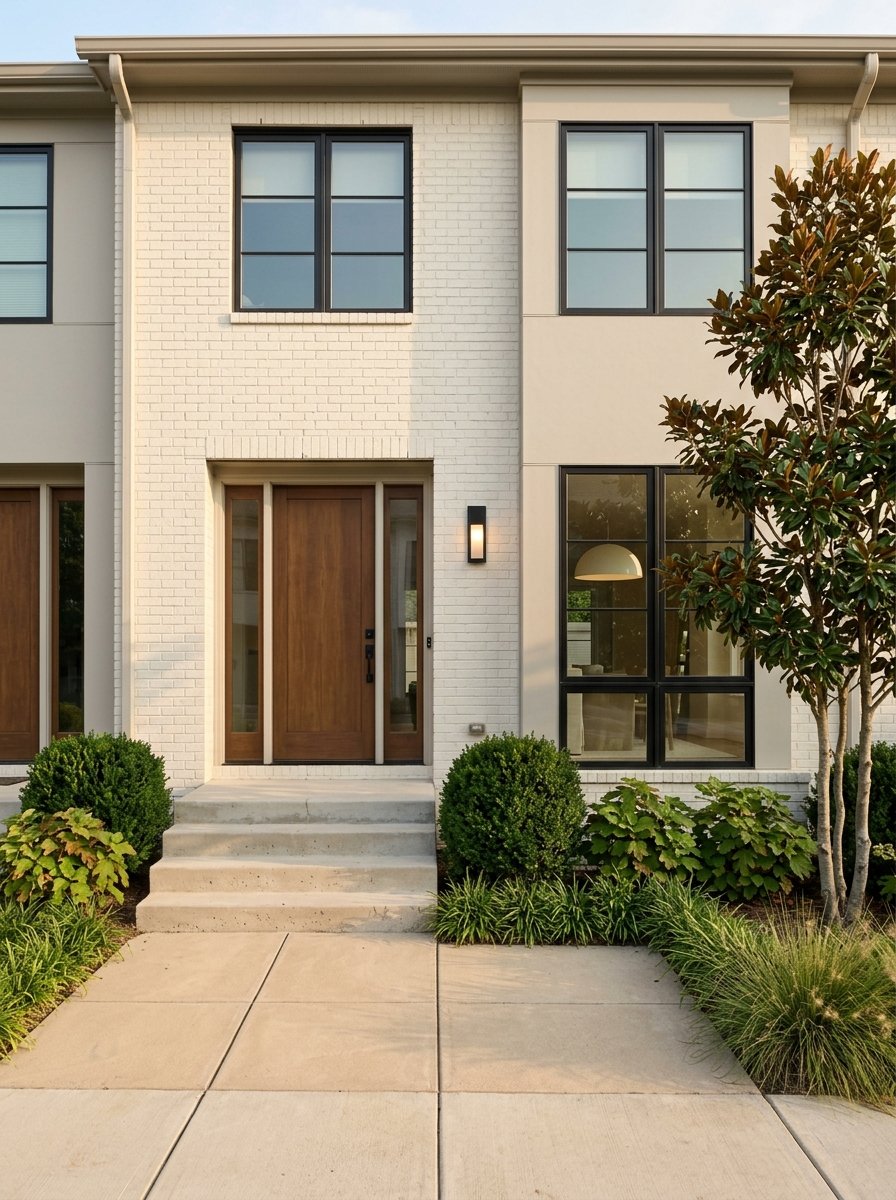
If your house feels like more work than comfort these days, you are not alone. Many homeowners start thinking about a simpler setup when yard work, unused rooms, and ongoing upkeep stop matching the way they actually live. If you are considering downsizing to a townhome in Dunwoody, this guide will help you weigh the real tradeoffs, understand local costs, and get clearer on what your next move could look like. Let’s dive in.
Why Dunwoody townhomes are worth considering
Downsizing in Dunwoody is not just about finding less square footage. It is also about finding a home that better fits how you want to spend your time, how much maintenance you want to handle, and what monthly costs feel comfortable.
Dunwoody’s current comprehensive plan points to a need for more housing options, including homes that work well for seniors and first-time buyers. Community feedback also highlighted interest in walkable shops and restaurants, better connectivity, and preserving neighborhood character and greenspace. That makes low-maintenance housing like townhomes a practical part of the local housing conversation.
For many homeowners, that combination is appealing. You may be able to stay in a location you know while reducing exterior chores and shifting into a home that feels easier to manage day to day.
What the Dunwoody townhome market looks like
One of the biggest realities to know upfront is that inventory is fairly limited. As of early June 2026, Redfin showed 11 townhouses for sale in Dunwoody with a median listing price of $580,000, while Realtor.com showed 17 townhomes for sale with a median listing home price of $618,000.
For context, the broader Dunwoody market had 132 active listings, a median listing price of $649,999, a median sold price of $700,000, and a median of 32 days on market. In other words, townhomes are part of the market, but you may not have a huge number of options at any one time.
That matters if you are trying to time a sale and purchase together. A smaller pool of listings can mean you need to act with a clear plan, especially if you have specific layout needs.
How much space can you expect?
A townhome in Dunwoody may be smaller than your current house, but that does not automatically mean cramped. Current examples show a wide range, with 3-bedroom townhomes running from about 1,383 to 2,862 square feet.
That range is important because downsizing is rarely just about going smaller. It is about right-sizing. You may want fewer unused rooms, but you might still want a guest room, office space, or room for hobbies and storage.
Recent listings also show a mix of ages and styles. Examples include a 2007-built home with 1,383 square feet, a 1972-built home with 1,998 square feet, a 1986-built home with 2,862 square feet and a 2-car garage, and a 2016-built home with 1,770 square feet.
Layout matters more than square footage
When you are downsizing, the floor plan often matters more than the total number on paper. A well-designed 1,700-square-foot townhome can live much better for you than a larger house with rooms you no longer use.
In Dunwoody, some townhomes are traditional 2-story or 3-level homes with upstairs primary suites and lower-level flex spaces. Others are ranch or patio-garden style homes that live on one level.
That gives you a very practical choice. If stairs are not a concern, a multi-level townhome may give you more separation of space. If ease of movement is a priority, a one-level layout may be a better fit.
Before you tour homes, it helps to make a short list of what truly matters most:
- Main-level primary bedroom or full one-level living
- Attached garage
- Space for guests or an office
- Minimal stairs
- Outdoor sitting area
- Lower-maintenance exterior
- Storage for seasonal items or hobbies
What outdoor space is realistic?
A townhome usually means trading a larger yard for smaller private outdoor space. That can be a plus if you are tired of regular yard work, but it is still worth getting specific about what you want.
Current Dunwoody listings show patios, rear porches, screened porches, and decks. Some newer homes sit on very small lots, roughly in the 697 to 999 square foot range, while older townhomes may have somewhat larger lots.
If being outside matters to you, look beyond the words “low maintenance.” Ask yourself whether you want room for container gardening, a grill, morning coffee, or simply a private place to sit. A smaller outdoor area can still feel useful and enjoyable if it fits your routine.
HOA dues can change the math
For many downsizers, HOA dues are the biggest adjustment. They can make life easier by covering shared maintenance, but they also become part of your monthly housing cost.
Current Dunwoody townhome listings show just how much HOA structures can vary. Examples include dues of $176 per month, $250 per month, and $310 per month. Coverage can include trash, grounds maintenance, termite service, reserve funds, sewer, water, maintenance structure, pest control, security, and swim or tennis amenities.
That is why it is so important not to assume two townhomes with similar prices will have the same total cost. One community may have lower dues but cover less. Another may have higher dues that offset more exterior responsibilities.
What to review in the HOA packet
In Georgia, HOA rules are governed by each association’s founding documents. Dues increases and special assessments generally follow the bylaws and CC&Rs, so the details matter.
The Georgia Attorney General’s Consumer Ed says owners in associations subject to the Georgia Condominium Act or the Georgia Property Owners’ Association Act can request comprehensive reports of the association’s finances and budget projects at the annual board meeting. For a buyer, that is a reminder to review the association documents carefully before closing.
As you compare communities, focus on these questions:
- What exactly do the monthly dues cover?
- Are there amenities included that you will actually use?
- Is exterior maintenance fully covered or only partially covered?
- Are water, sewer, trash, or pest control included?
- Is there a reserve fund?
- Have there been recent or recurring special assessments?
- What insurance responsibilities stay with the owner?
The goal is simple: understand what you are buying, what you are paying for, and what you will still need to handle yourself.
Ownership costs go beyond the purchase price
A lower-maintenance home does not mean no maintenance costs. You still need to budget for the full monthly picture.
Georgia Consumer Ed lists common ownership costs such as insurance, property taxes, utilities, appliances, furniture, repairs, maintenance, and yard care. In a townhome, some of these may be reduced or partly covered by the HOA, but they do not disappear.
For a move-down buyer in Dunwoody, your true monthly cost may include:
- Mortgage payment or cash flow impact
- HOA dues
- Homeowners insurance
- Property taxes
- Utilities
- Interior repairs and upkeep
- Furnishings that fit the new space
This is where downsizing decisions become much clearer. A townhome may cost less to maintain than a detached house, but the best choice depends on how all of your monthly costs fit together.
Plan for closing costs and moving expenses
The purchase price is only one part of the move. CFPB says closing costs typically run about 2% to 5% of the purchase price, not including the down payment.
You also want to leave room in your plan for moving costs, light renovations, replacement furniture, storage, and an emergency cushion. If your current home has larger rooms, some existing furniture may not work well in a more compact layout.
This is one reason many homeowners benefit from planning the move in stages. First estimate your likely net proceeds from your current home. Then compare that with your target purchase price, expected closing costs, and your new monthly carrying costs.
Do not overlook DeKalb homestead rules
If the Dunwoody townhome will become your primary residence, property tax details matter. In DeKalb County, homestead exemptions are not automatic and they do not transfer from one home to another.
The county says you must apply by April 1, and the home must be your legal residence on January 1. According to the 2026 homestead information sheet, the basic exemption reduces assessed value by $12,500 for school taxes and $10,000 for county levies, and a county assessment freeze applies to homestead properties.
The City of Dunwoody also provides tax relief for homestead properties. The city says homesteads receive a 1.000-mill exemption, effectively lowering the rate to 2.04 mills, and city assessment freezes also apply. On the city’s property tax page, Dunwoody notes that a typical $350,000 home pays about $21 per month in city property taxes.
Start with lifestyle, then run the numbers
It is easy to begin with online listings, but the smartest first step is usually defining what you want your next chapter to feel like. Are you trying to reduce upkeep, cut monthly costs, simplify your space, or stay close to the places you enjoy most? Your answer shapes everything else.
AARP’s 2024 survey found that among adults age 50-plus who plan to move, 60% want to lower housing and maintenance costs and 55% cite property taxes. That lines up with what many downsizers already know from experience: the decision is often about both lifestyle and economics.
Once you know your goals, the comparison becomes more useful. Instead of asking only, “How big is the townhome?” ask:
- How much equity will I bring from my current home?
- What will my total monthly cost look like?
- How much maintenance am I giving up?
- Do I want one-level living or can I handle stairs?
- How much private outdoor space do I really need?
- Does this move simplify my life in a meaningful way?
If the answers feel aligned, a Dunwoody townhome could be a smart right-sizing move rather than just a smaller address.
If you want a calm, strategic conversation about whether downsizing makes sense for your timeline, budget, and lifestyle, Katherine Duquette can help you think through the options and next steps.
FAQs
What size townhomes are currently available in Dunwoody?
- Current examples range from about 1,383 to 2,862 square feet, with many offering 3 bedrooms and roughly 2.5 to 3.5 baths.
What do Dunwoody townhome HOA dues usually cover?
- Current listings show dues ranging from about $176 to $310 per month, with possible coverage for grounds maintenance, trash, termite service, water, sewer, reserve funds, pest control, security, and some amenities.
Are there one-level townhome options in Dunwoody for downsizers?
- Yes. Current listings show both traditional multi-level townhomes and ranch or patio-garden style homes that live on one level.
How much outdoor space do Dunwoody townhomes usually have?
- Many offer patios, porches, screened porches, or decks instead of larger private yards, and lot sizes can be quite small in some newer communities.
What extra costs should you budget for when buying a townhome in Dunwoody?
- In addition to the purchase price, you should plan for closing costs, moving expenses, HOA dues, insurance, property taxes, utilities, furnishings, repairs, and an emergency cushion.
What should DeKalb County homeowners know about homestead exemptions after a move?
- Homestead exemptions are not automatic or transferable to a new home, and DeKalb County says you must apply by April 1 if the property is your legal residence on January 1.